apprenticeships
FMB Cymru calls for apprenticeship reform as Wales builders face skills gap before recovery
The trade body for small builders says Wales must train apprentices now, despite weak homeowner demand, or it will lack the skilled workforce to take on renovation and retrofit work when confidence returns.
The Federation of Master Builders (FMB) Cymru has urged Wales to reform apprenticeships and train builders now, warning on 16 October that the country will miss out on an economic recovery if it waits.
The trade body said homeowner planning applications in Wales had fallen 15% over two years, which it described as the steepest fall anywhere in England and Wales, yet small building firms were already struggling to find skilled workers.
FMB Cymru said that gap would widen once homeowners regained confidence and started investing in large renovations again, holding back the recovery and the Welsh plans to make existing homes warmer and more energy efficient.
Ifan Glyn, director of FMB Cymru, said: "The market is down, particularly here in Wales, yet we already face a shortage of skilled builders. When confidence returns and homeowners start investing again, that shortage will bite even harder."
The figures
The FMB attributed the 15% fall to Planning Portal data. The Planning Portal's July 2026 market insight report found householder submissions across England and Wales were 8% lower than in July 2025 and 4% below June 2026. In July alone, Wales recorded the largest month-on-month percentage increase in applications of any region, up 6% or 90 applications.
On the workforce side, the FMB cited a Construction Industry Training Board (CITB) estimate that Wales needs to recruit an average of 1,240 extra construction workers a year to meet expected demand, while the sector is losing about 300 workers a year.
CITB published its Construction Workforce Outlook 2026-30 on 17 June 2026, with a separate Wales edition. Across the UK, it said an average of 41,200 extra workers will be needed each year between 2026 and 2030, and that workforce pressures will increasingly strain the industry's capacity to deliver on housing, infrastructure and retrofit commitments.
The apprenticeship system
Glyn said apprenticeship reform mattered because renovation work was the moment to add energy efficiency and retrofit measures, but only if skilled people were available to do it. He called for a system that works for the small building companies that train so many future tradespeople.
Marc Reardon, FMB Cymru president, said small builders were the backbone of training in Wales and most had learned their trade on site from someone who gave them a chance.
"But taking on an apprentice is a big commitment for a small firm, in time, money and paperwork, and right now the system makes that harder than it should be," he said. Every apprentice trained today, he added, was a skilled tradesperson ready for when work returned, and waiting for the recovery before training would be too late.
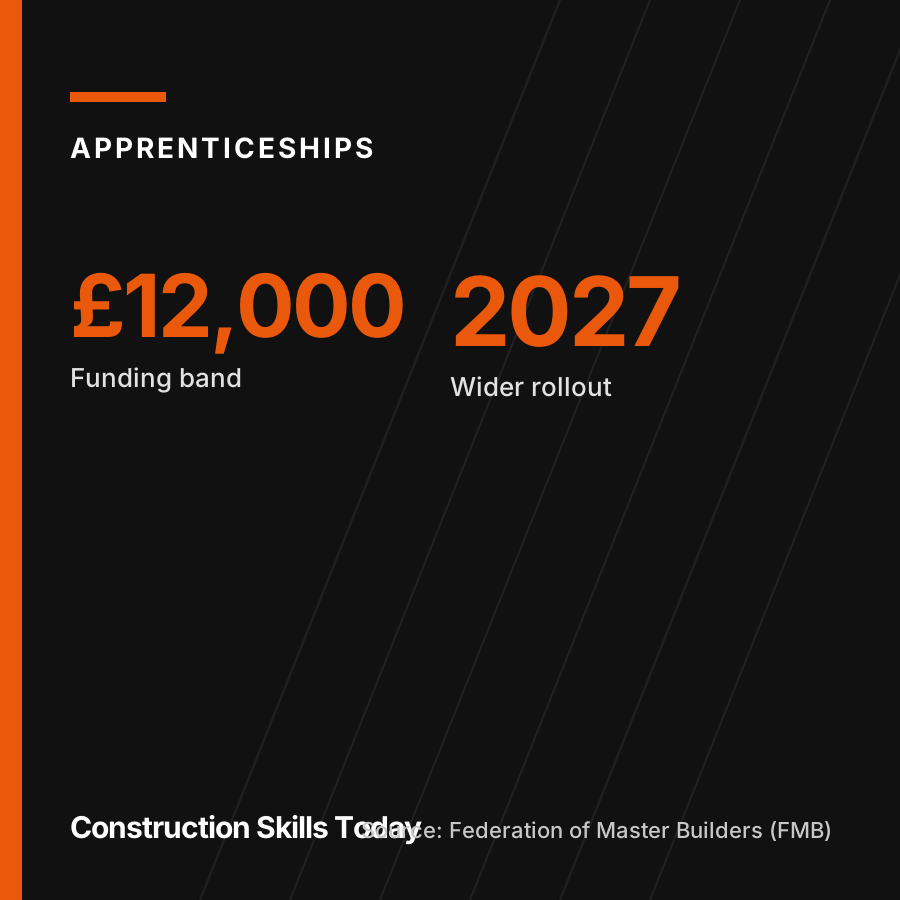
The call came a day after the FMB welcomed the publication by Skills England of a new Level 2 General Builder apprenticeship standard, which applies to construction training in England. The FMB said the standard was developed by SMEs for SMEs, with its members leading its creation, and would give learners foundational experience across bricklaying, carpentry, plastering and painting.
Brian Berry, chief executive of the FMB, said the federation had been part of developing the standard from the start. The first training providers in England are expected to offer the apprenticeship from March 2027.
Retrofit demand in Wales
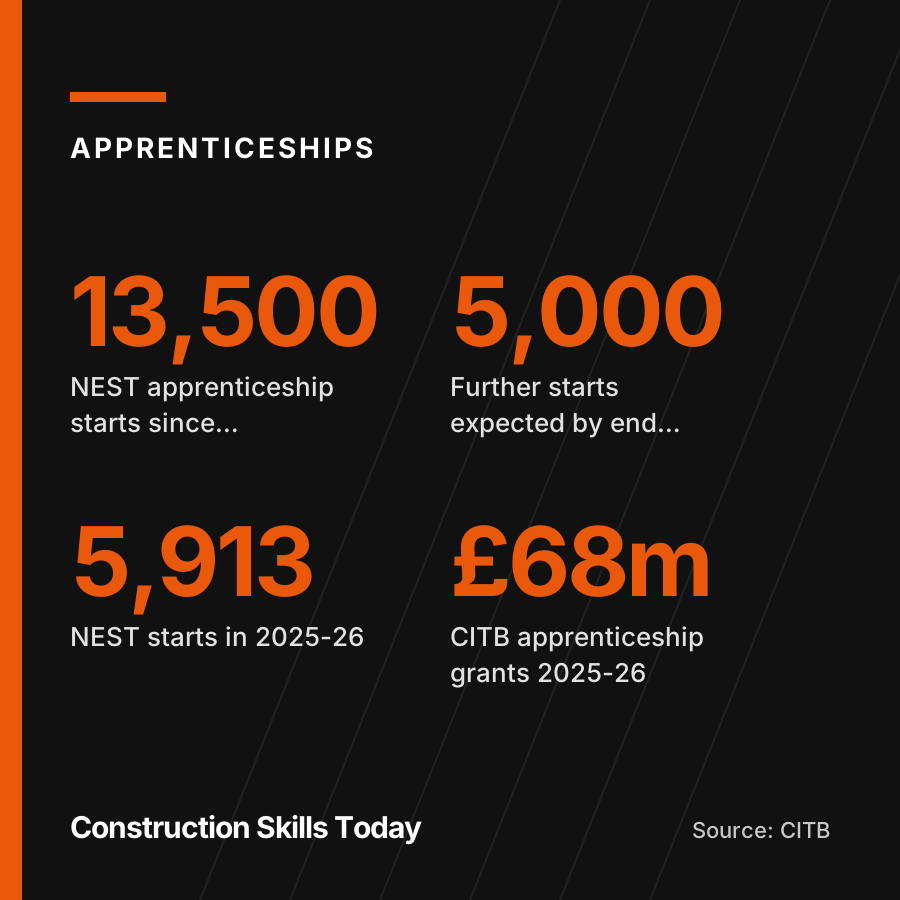
FMB Cymru's warning ties the skills shortage to Welsh home energy policy. On 20 July 2026 the Welsh Government announced £17m of investment in home energy upgrades, including £8m for the Optimised Retrofit Programme to retrofit social housing with energy efficiency measures and a further £5m for the Nest scheme, which supports eligible private-sector households.
The FMB describes itself as the UK's largest trade association for small building companies and a member-led, not-for-profit organisation representing around 6,500 vetted SME building firms across the UK.
On the record: Federation of Master Builders
Sources
- Federation of Master Builders (opens in a new tab) (accessed 2026-10-17)
- Federation of Master Builders (opens in a new tab) (accessed 2026-10-17)
- Federation of Master Builders (opens in a new tab) (accessed 2026-10-17)
- Federation of Master Builders (opens in a new tab) (accessed 2026-10-17)
- Construction Industry Training Board (opens in a new tab) (accessed 2026-10-17)
- Construction Industry Training Board (opens in a new tab) (accessed 2026-10-17)
- Planning Portal (opens in a new tab) (accessed 2026-10-17)
- Welsh Government (opens in a new tab) (accessed 2026-10-17)
This story was researched from the primary sources above and checked against them before publication. Spotted an error? Tell us and we will correct it promptly.