training
Building and Construction named as possible Vocational GCSE as DfE poll shows 84% back hands-on options
The Department for Education has published polling of 500 young people as it sets out a timetable for Vocational GCSEs from 2029, with Building and Construction among the subjects under consideration.
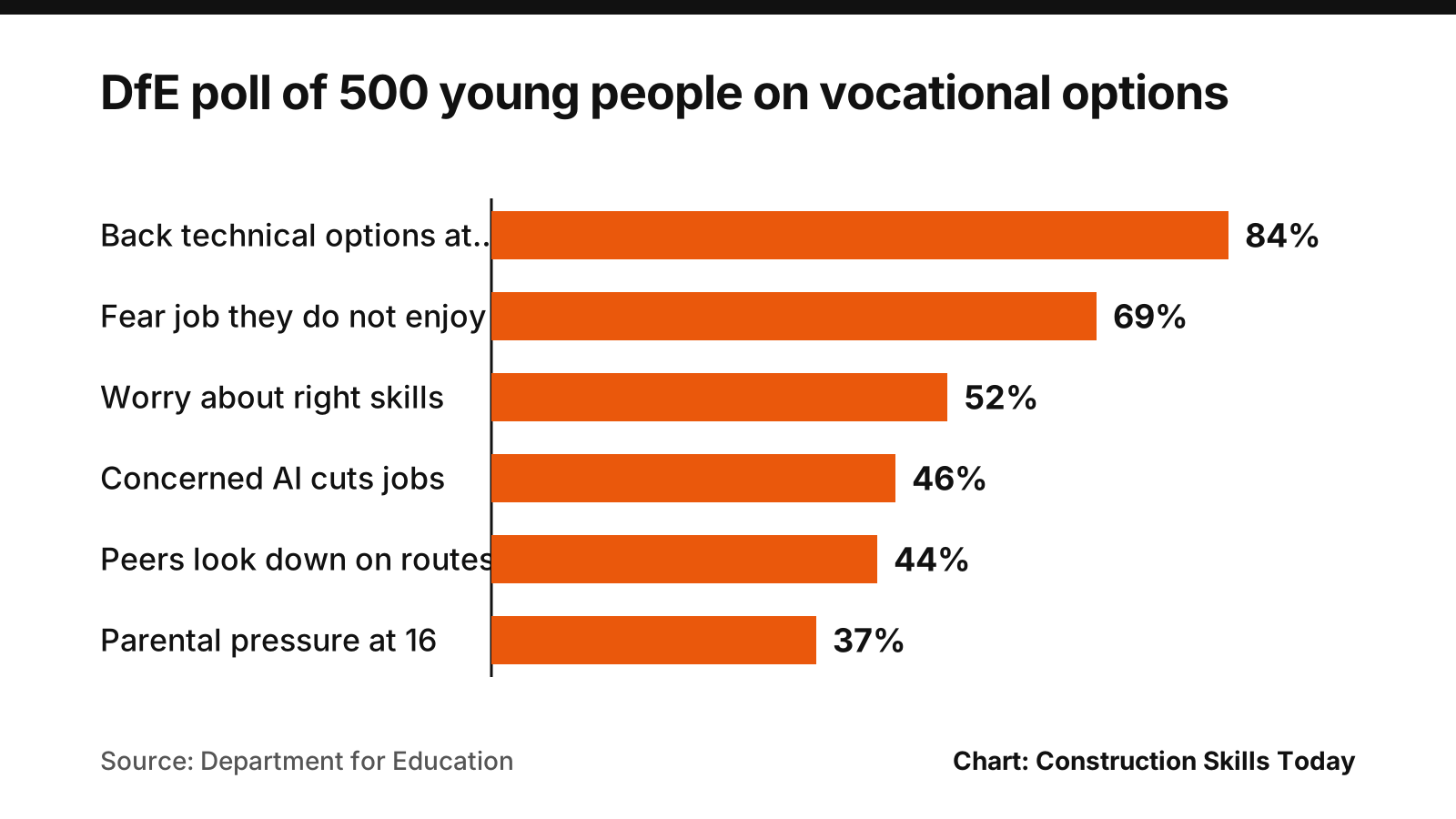
The Department for Education (DfE) has named Building and Construction among the possible subjects for new Vocational GCSEs, as polling it published on 9 October found 84% of young people back hands-on options from age 14.
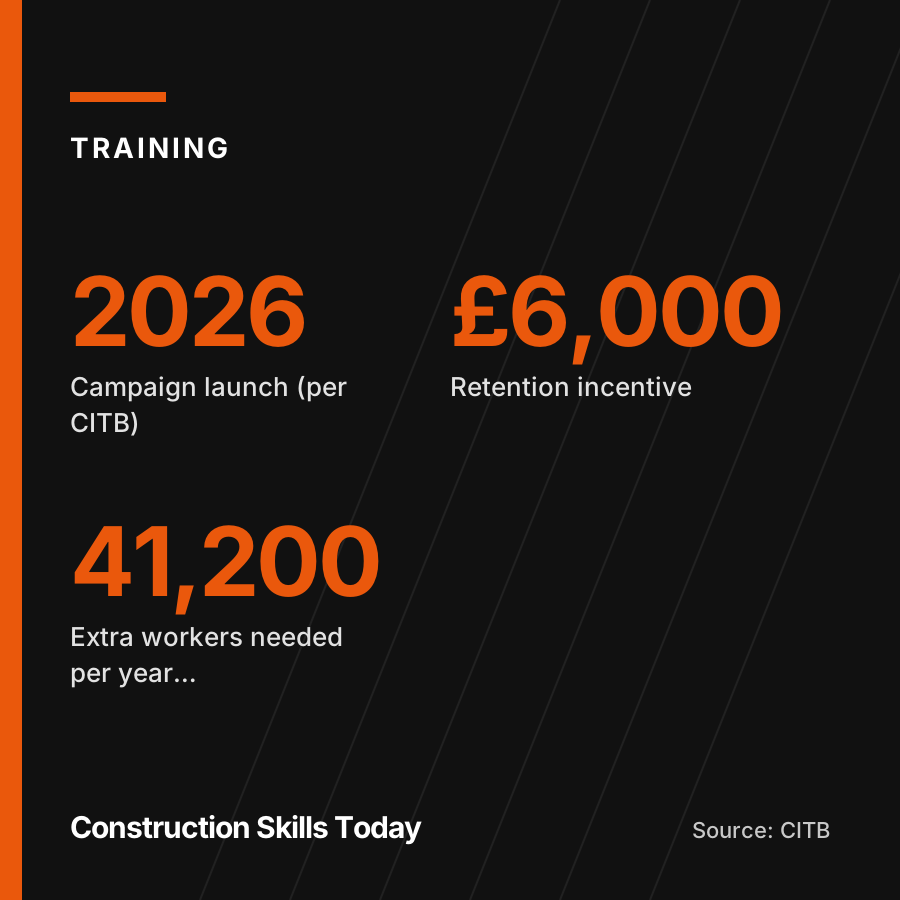
The department said the Vocational GCSEs would eventually replace the existing Technical Awards and could be available in some subjects from September 2029, within broader technical pathways that start in September 2028. A consultation to shape them will be published before the end of 2026, it said.
Other subject options listed by the DfE include Business Management and Finance, Creative Media Production, Digital Tech and Child Development.
John Wilkinson, Chief Operating Officer at BAM UK & Ireland, was among the industry voices the department quoted in support of the reforms. He said: "Technical routes should be seen as an aspirational choice, not a second choice."
The polling
The DfE said it polled 500 young people who are due to make, or have recently made, choices about their options at 14 and 16.
| Finding | Share of those polled |
|---|---|
| Support new options at 14 combining technical and academic learning | 84% |
| Say vocational and technical routes are looked down on by peers | 44% |
| Feel parental pressure to choose academic options from 16 | 37% |
| Biggest concern is ending up in a job they do not enjoy | 69% |
| Concerned AI advances could reduce employment opportunities | 46% |
| Worry about having the right skills for future jobs | 52% |
Education Secretary Lucy Powell said: "The message from young people is clear: they want more choice and more opportunities to develop practical skills that lead to rewarding and prosperous careers."
Pepe Di'Iasio, General Secretary of the Association of School and College Leaders, said vocational and technical pathways had played second fiddle to academic qualifications for too long.
How the qualifications will work
According to the DfE, Vocational GCSEs will have nationally set standards, unlike Technical Awards, with grading and assessment regulated by Ofqual to give parity with traditional GCSEs. Its 23 September announcement said subject content would be based on subject expert advice, and that English, Maths and Science would remain a common entitlement.
The September release also said the government wants employers to provide an additional 200,000 work experience placements for 14 to 16-year-olds.
At post-16, the first V Levels start in September 2027. The DfE's October release lists them as Education and Early Years, Finance and Accounting, and Digital. The department's Education Hub blog said each V Level will be equivalent in size to one A level, and its post-16 pathways implementation plan sets out a choice at level 3 between A Levels, V Levels and T Levels.
Foundation Certificates, a one-year bridging route before V Levels, T Levels or A Levels, will also start in September 2027, initially in Education and Early Years and Digital, the DfE said.
For construction, the relevant date is later. The implementation plan lists construction, and engineering and manufacturing, Occupational Certificates in its 2028 tranche. The plan says only the 2027 subjects are confirmed, that subjects listed beyond 2027 are indicative, and that the 2028 list is to be finalised in early 2027.
The construction voices
The DfE's release featured Joe Shingler, 21, from Shrewsbury, who is completing an HNC Level 4 in Construction and Built Environment at Shrewsbury College and works for his family's business, The Shingler Group. The department said he won a Medal for Excellence in Bricklaying at WorldSkills Shanghai 2026, and he told the DfE he would have liked the chance to learn vocational subjects at school.
WorldSkills UK said Team UK fielded 28 competitors across 25 skill competitions in Shanghai. Its Chief Executive, Ben Blackledge, described the results as a set everyone in the UK should be proud of, and James Staniforth, Principal of Shrewsbury College, earlier described Shingler as an ambassador for UK skills.
The release also quoted Oliver Coombs, 20, from Bath, who completed a T Level in Engineering, is on a Higher Level Apprenticeship with civil engineering consultancy BIMTek and Bath College, and won Bronze in Additive Manufacturing at the same event.
Wilkinson, for BAM, linked the reforms to the UK's infrastructure investment programme and the skills needed to deliver it.
The youth employment backdrop
The DfE framed the reforms as part of its effort to tackle youth unemployment. The Office for National Statistics' latest bulletin estimated 981,000 people aged 16 to 24 in the UK were not in education, employment or training (NEET) in April to June 2026, a rate of 13.0%. That was up 30,000 on the year but down 30,000 on the quarter.
The DfE's consultation on Vocational GCSEs is due before the end of 2026, with the first V Levels starting in September 2027.
Sources
- Department for Education (GOV.UK) (opens in a new tab) (accessed 2026-10-09)
- Department for Education (GOV.UK) (opens in a new tab) (accessed 2026-10-09)
- Office for National Statistics (opens in a new tab) (accessed 2026-10-09)
- Department for Education (Education Hub blog, GOV.UK) (opens in a new tab) (accessed 2026-10-09)
- Department for Education (GOV.UK) (opens in a new tab) (accessed 2026-10-09)
- WorldSkills UK (opens in a new tab) (accessed 2026-10-09)
- WorldSkills UK (opens in a new tab) (accessed 2026-10-09)
- Shrewsbury College (opens in a new tab) (accessed 2026-10-09)
This story was researched from the primary sources above and checked against them before publication. Spotted an error? Tell us and we will correct it promptly.